


Root Canal Treatment
Root canal treatment, also known as endodontics, is a dental procedure designed to treat infection or irreversible inflammation of the nerve or pulp of a tooth. This may be caused by deep decay, a fracture of the tooth, or severe periodontal disease.
The structure of the tooth
A tooth is made up of three parts:
- The enamel, which is the hard outer coating of a tooth,
- The dentine, a softer, bone-like material that supports the enamel, and
- The pulp, which is made of soft tissue (containing nerves and blood vessels) at the centre of the tooth.
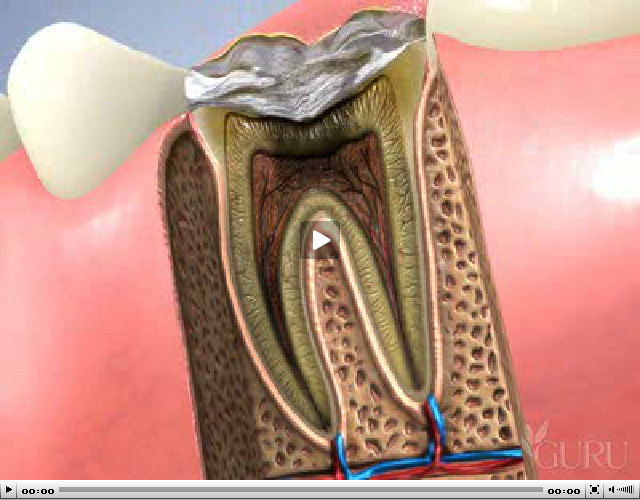
The root canal
The pulp has a path that runs down through the inside of the tooth and into the gum and jawbone. This path is known as a root canal. In some cases, a single tooth can have more than one root canal. The term root canal can be slightly misleading because it implies that the root canal of the tooth is empty. However, the root canal houses soft tissue that contains nerves and blood vessels.
If the pulp becomes infected by bacteria it will begin to die, which could result in the loss of the tooth. There is also the risk that the infection could spread down into the root canal, which may lead to the development of a painful dental abscess (a pus-filled swelling). The infection could then spread to your gums (causing a perio-endo lesion) or the tissue and bones that support your teeth (periodontitis).
Root canal treatment
Root canal treatment is designed to save the tooth and prevent the spread of infection. The inflamed or infected pulp is removed from the tooth and the root canal is then cleaned of all bacteria. After the bacteria have been removed, the root canal and pulp are filled using a rubber filling, before being sealed.
Is sensitive tooth treatment painful?
Root canal treatment is commonly perceived as being a painful procedure. In fact, in the hands of a properly trained dentist, root canal treatment is relatively painless, and it should be no more unpleasant than having a filling done. Root Canal Treatments carried out at Smile Cliniq are in-line with best practice techniques using Protaper files, electronic apex locators and Sodium hypochlorite.
Root canal treatment is one of the most challenging treatments for a dentist to perform. There are many risks and possible causes of problems when performing a root canal treatment, and accurate measurements, correct instrumentation and moisture (bacteria) control is vital to ensuring a good result.
Root canal treatment can be very complex and is a time consuming procedure, and in some difficult cases it is best to see a specialist endodontist straight away. This is because the success of a root canal treatment being carried out for the first time is much higher than the second time and if it is not done to a high standard, there is a risk of the root canal treatment failing. If this happens, there is a need for a re-root canal treatment. Unfortunately, the success rates of re-root canal treatments are much lower, hence it is important to get it completed correctly the first time.
At Smile Cliniq, we also have a specialist endodontist Dr Nojan Khalehoghli who has many years of experience and has completed post graduate education solely in endodontics. He is available for more complex root canal treatments.
Procedure
At Smile Cliniq, we make sure that the risk of failure is minimised by using best practice techniques and high tech equipment to locate the ends of the roots, ensuring the filling reaches the whole length of the root canal. We have also invested in specially designed fibre optic lights that the dentist may use with their magnifying surgical loupes, for a much clearer and enlarged vision of the very small root canal openings.
We anaesthetize the tooth fully to ensure that the treatment is carried out comfortably.
We then isolate the tooth usually with a rubber dam to ensure that the field is kept as sterile as possible and new bacteria contamination of the tooth by saliva is avoided. Maintaining a moisture-free, sterile environment when performing a root canal treatment is important as this prevents any bacteria in the mouth from entering the canals.
We use modern flexible titanium Protaper files to ensure that the canals are shaped efficiently. We only use our files once, in order to minimise the risk of fracture and reduce the risk of cross infection.
We use high tech electronic apex locators to establish the length of canals accurately and to reduce the number of radiographs and hence radiographic dosage. We thoroughly clean the canals with powerful disinfectants such as sodium hypochlorite and occasionally iodine to destroy any remaining bacteria inside the canals.
We also use top of the range equipment when placing the filling material, in certain cases – the hot shot and hot tip from smart endodontics.
The HotShot is a cordless backfill obturation device that fills the canals. The thin and flexible needles provide easy access to even very thin canals, ensuring fuller obturation lowering the risk of re-infection.
The HotTip is a cordless warm vertical compaction device, and comes in a variety of sizes to accommodate different sized canals.
Use of this equipment reduces chair time for the patient and allows the dentist to carry out the treatment smoothly and easily. You may experience some post-operative pain which usually settles down with pain killers.

- Please click here for our fees guide.
- Please click here for examples of our work
- For further details of our techniques, materials and techniques please click here.
- Please click here for our guide to maintaining your oral hygiene.
- Interest free payment options are available
- Return to the top of the page














Finchley
02083431133
St Johns Wood
02073281200

